Mexico’s monarch butterfly population jumps 64%, offering hope for at-risk species
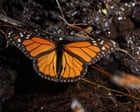
The insects covered its largest area since 2018, despite threats from habitat loss, climate crisis and pesticidesThe population of monarch butterflies in Mexico increased 64% this winter, compared with the same period in 2025, offering a glimmer of hope for an insect considered at risk of extinction.The figures, released this week by the World Wildlife Fund (WWF) Mexico, showed that the area occupied by monarchs expanded to 2.93 hectares (7.24 acres) of forest from 1.79 hectares (4.42 acres) the previous winter, the largest coverage since 2018.“The monarch butterfly is the symbol of the trilateral relationship between Mexico, the United States and Canada,” Mexican environment minister Alicia Bárcena Ibarra said at a news conference on Tuesday. “Its conservation is a collective commitment we must maintain for the future.”Every fall, tens of millions of the butterflies travel nearly 3,000 miles from Canada, across the US and finally to the forests of western Mexico. There, the orange insects cover entire trees and flutter through the air in spectacular fashion.But a combination of habitat loss from deforestation, climate crisis and the use of herbicides has seen their numbers plummet over the last 30 years.In the US, the increasing use of herbicides like glyphosate and dicamba has seen the amount of milkweed, the only plant that monarch caterpillars can eat, drop considerably, with butterfly numbers also plummeting as a result.Because of this decline, the Biden administration had proposed listing the monarch as threatened under the Endangered Species Act at the end of 2024, but Trump officials have since delayed the decision indefinitely. In February, two environmental groups filed a lawsuit to compel the Trump administration to set a date for protections. “It would be unforgivable for [the monarch’s] epic migrations to collapse because of political cowardice on enacting range-wide protections for them,” said Tierra Curry, endangered species co-director at the Center for Biological Diversity, one of the groups behind the lawsuit in a statement. “Even the Trump administration has to think twice about letting these iconic butterflies collapse toward oblivion.”In Mexico, the spread of avocado farming in the state of Michoacán has seen vast swaths of forest lost to illegal logging, driven partly by organized crime groups who have infiltrated the highly profitable avocado trade.Compared with a peak of nearly 18.21 hectares (45 acres) in the winter of 1995, the area covered by monarchs in Mexico today is just a sliver, and well below the 6.07 hectares (15 acres) that scientists say are necessary for the species’ survival.The involvement of cartels in logging has at times become deadly: in 2020, Homero Gómez González, one of the best-known monarch butterfly conservators in Mexico, was found dead, with his family suspecting he was murdered by organized crime groups intent on clearing the monarch’s habitat.Still, conservation efforts have slowed logging in recent years: from a peak of nearly 500 hectares (1,235 acres) of forest in 2003-2004, just 2.55 hectares (6.3 acres) between February 2024 and February 2025 were affected.“One of the greatest achievements of this work is that illegal logging in the core zone of the Monarch Butterfly Biosphere Reserve has been virtually eradicated since 2008,” María José Villanueva, WWF Mexico’s director, told reporters. “This means that the forests that represent the fundamental habitat for the monarch butterfly’s hibernation are being protected and conserved.”