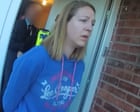
Lady Justice Thirlwall condemns ‘complete failure’ to protect babies on neonatal unit at Countess of Chester hospital
Lucy Letby public inquiry report published – latest updates
Three babies may have survived and seven others could have been protected if hospital bosses and doctors had taken action over concerns about the nurse Lucy Letby, an official inquiry into the deaths has concluded.
A public inquiry led by Lady Justice Thirlwall found a “complete failure” to protect babies on the neonatal unit at the Countess of Chester hospital in north-west England.
In a series of devastating findings, the judge said two newborn twins would not have died and five others would not have been harmed if Letby had been removed from the unit sooner.
Thirlwall said a third baby who died, a two-month-old girl, and two others who suffered unexplained collapses may have been protected if a doctor had detected an earlier insulin poisoning on the unit. One of those infants, now aged 11, suffered a lifelong brain injury and needs 24-hour care.
Letby, 36, is serving 15 whole-life prison terms after being convicted of the murder of seven babies and attempted murder of seven other newborns at the hospital in the year to June 2016.
The former neonatal nurse protests her innocence and is fighting to overturn her convictions, which have been described by the senior Conservative MP David Davis as a “clear miscarriage of justice”.
The court of appeal has twice rejected Letby’s bid to challenge her convictions. The Criminal Cases Review Commission, which investigates potential miscarriages of justice, is reviewing a dossier of evidence submitted by experts on her behalf before deciding whether to refer the case back to the court of appeal.
Delivering her report at Liverpool town hall on Tuesday, where families of some of the babies had gathered, Thirlwall said: “My report describes dysfunctional management and governance; a gulf between hospital leadership and clinicians; and failure to understand the fundamentals of safeguarding.
“There was a complete failure to protect babies on the neonatal unit at the Countess of Chester hospital. This was because no one seems to have understood that safeguarding action is required when a member of staff is suspected of causing deliberate harm and does not require colleagues to be sure of guilt.”
In her 822-page report, Thirlwall recommends sweeping changes to the NHS – including installing 24-hour cameras on every cot in a neonatal unit – and beefed-up oversight from the healthcare regulator, the Care Quality Commission.
However, the inquiry chair said she was not reassured that ministers would act on her recommendations after the abolition of NHS England and little clarity on which body would take responsibility.
She accused successive governments of an “inexcusable” failure to enact the reforms of similar public inquiries over the last 30 years.
Letby, who joined the Countess of Chester hospital from university in 2012, was first linked to baby deaths in June 2015. In less than two weeks that month, three newborns died in unexplained circumstances within two weeks – the number usually expected on the neonatal unit in a year.
Senior doctors became increasingly concerned about Letby’s connection to the unusual rise in deaths and serious incidents over the following months and raised their fears with executives.
However, the inquiry found that senior nurses effectively dismissed the concerns about Letby and that there was a “prolonged delay” in calling the police.
Rather than being believed, Thirlwall said, clinicians were themselves made the subject of investigation in a “deplorable” grievance process brought by Letby when she was finally removed from the neonatal unit in July 2016.
The inquiry, which received evidence from nearly 400 witnesses, found that parents were “kept in the dark” for years about what happened to their babies and the concerns they may have been deliberately harmed. This was “reprehensible”, Thirlwall said.
Despite the concerns of senior doctors, the inquiry found that the hospital’s risk and patient safety department took no action until the end of June 2016, when two twin boys died unexpectedly. Thirlwall said the department “failed in its fundamental task to enhance patient safety”.
The inquiry chair accused hospital executives of overseeing “an exercise in spin” by downplaying the rise in deaths to the board of directors.
Their failure to contact police before April 2017 – nearly two years after the unexplained increase in deaths – suggested that protecting the hospital’s reputation was “prized more highly” than the doctors’ concerns, she found.
Thirlwall, a court of appeal judge, said it was “clear that some babies would have been saved and some attacks would have been prevented if action was taken earlier”.
She said the precise number of deaths that may have been prevented would never be known for sure.
However, the inquiry concluded that if Letby had been removed from duties in October 2015 – when senior managers were made aware of the concerns – then the twin boys known as babies O and P would not have died in June 2016 and five further babies would not have suffered harm.
Thirlwall said it was possible that three newborns would not have died and seven others would have been protected if a senior doctor had not “disregarded” an insulin result for a week-old baby boy in August 2015, whom Letby was later convicted of attempting to murder by poisoning him.
While Letby’s case has attracted international attention as potentially one of the most serious miscarriages of justice in modern British history, there is no mention in the 822-page report of the questions surrounding her convictions.
Thirlwall last year rejected applications by Letby’s legal team and four hospital executives to pause her inquiry until the CCRC has decided whether it believes her convictions may be unsafe. She said at the time it was not Letby’s actions she was scrutinising, but those of her colleagues and senior managers.
The CCRC is assessing material from an international panel of experts convened by Letby’s legal team who believe there is no medical evidence she murdered or harmed any of the infants she was accused of attacking.